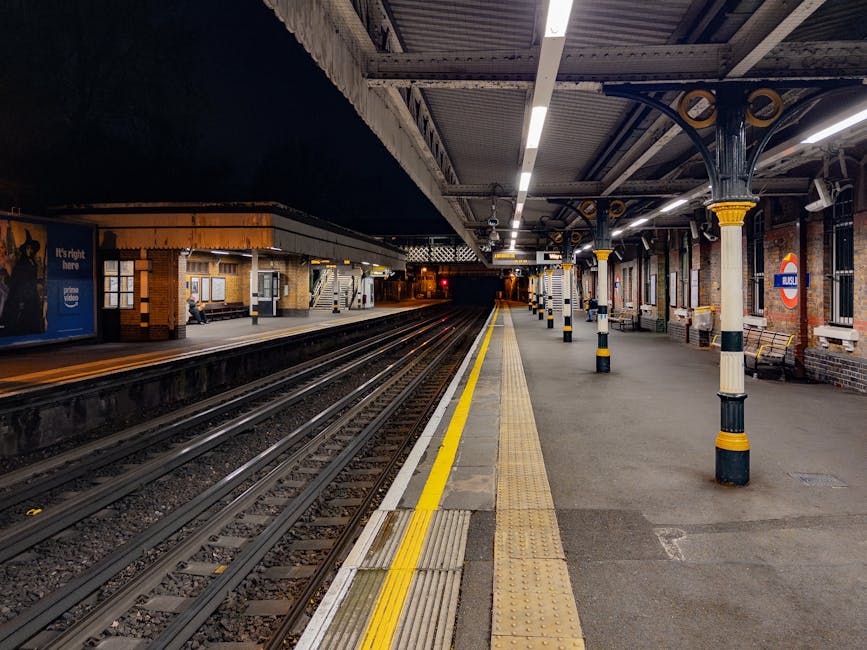
Forest Gate Station area: quick rubbish removal routes
If you need to shift rubbish quickly around Forest Gate Station, the real challenge is not usually the lifting. It is the routing. Narrow residential streets, busier school-run times, awkward parking, and the general stop-start rhythm of East London can turn a simple clearance into a slow one. This guide to Forest Gate Station area: quick rubbish removal routes is here to help you plan the fastest, cleanest way to get waste out without the usual faff.
Whether you are clearing a flat, a shop back room, a garden pile, or a few bulky items that have been leaning against the wall for far too long, the goal is the same: remove rubbish safely, avoid delays, and choose the most sensible route for the type of waste you have. Along the way, we will look at local logistics, practical options, common mistakes, and the sort of decisions that save time on the day. Truth be told, a good route plan can matter more than people expect.
For a broader service overview, you may also find the main waste removal service useful, especially if your job is a mix of general rubbish, household items, and odd bits that do not fit neatly into one category.
Table of Contents
- Why Forest Gate Station area rubbish removal routes matter
- How quick rubbish removal works near Forest Gate Station
- Key benefits and practical advantages
- Who this is for and when it makes sense
- Step-by-step guidance
- Expert tips for better results
- Common mistakes to avoid
- Tools, resources and recommendations
- Law, compliance, standards and best practice
- Options, methods and comparison table
- Case study or real-world example
- Practical checklist
- Conclusion
- Frequently asked questions
Why Forest Gate Station area: quick rubbish removal routes Matters
Forest Gate Station sits in a part of London where convenience matters. If you are trying to clear rubbish quickly, the difference between a smooth job and a frustrating one often comes down to route choice, timing, and access. A "quick route" is not just the shortest line on a map. It is the least disruptive path for loading, transport, and disposal.
That matters because local waste rarely arrives in neat, single-purpose piles. You might have a broken wardrobe, a few bin bags, flattened packaging, builders' offcuts, or an old sofa with no room left in the hallway. The quickest rubbish removal route is the one that matches the waste type to the right service and the right collection method, so you do not waste time moving the same item twice. Annoying, but common.
There is also the neighbourhood factor. Around a station area, traffic can change quickly, parking can be tight, and shared access is often limited. A route that looks easy in theory can become awkward at 8:30 in the morning. So, planning matters. It saves time, helps avoid fines or blocked access, and makes the whole process less stressful for everyone involved.
For businesses, the stakes are even more obvious. A cluttered back office, a shop refit, or a stockroom build-up can slow operations down fast. In those cases, a dependable path to removal is more than tidiness; it is part of keeping the day moving. If your waste is commercial, the business waste removal service is often the most relevant starting point.
How Forest Gate Station area: quick rubbish removal routes Works
Quick rubbish removal in this part of Forest Gate usually follows a simple logic: assess the waste, choose the right disposal route, prepare access, and then collect or load efficiently. The "route" can mean several things at once. It may be the route a team takes to reach your property, the path rubbish takes from your door to the vehicle, or the disposal route from collection to sorting and recycling.
In practical terms, the process normally looks something like this:
- Identify the waste type. Furniture, household clutter, garden waste, builders' rubble, office clearances, and mixed junk all behave differently.
- Check access. Think about stairs, lift access, parking restrictions, loading space, and how close the vehicle can safely get.
- Match the service. For example, a flat clearance is not the same as a garage clearance, and neither is the same as a builders' waste job.
- Prepare the items. Bag loose waste, separate recyclable materials where possible, and make large items easier to carry if safe to do so.
- Load efficiently. A good team will work in a sequence that avoids backtracking, protects walls and flooring, and keeps the job moving.
- Route to the right facility. Reuse, recycling, and disposal should be handled according to the waste stream and local standards.
The fastest route is rarely the most casual one. In our experience, the jobs that finish quickest are the ones where someone has already thought about the small stuff: where the lift is, whether the sofa will fit through the door, whether the rear access gate is locked, and whether the neighbour's car is parked exactly where it should not be. You know the sort of thing.
If you are dealing with bulky household items, it can help to read up on furniture clearance or furniture disposal, because sofas, wardrobes, and beds often need slightly different handling from bagged rubbish.
Key Benefits and Practical Advantages
There are a few clear reasons why people look for quick rubbish removal routes near Forest Gate Station rather than trying to handle everything piecemeal.
- Less disruption: The rubbish is gone in one planned visit, instead of dragging the job over several days.
- Better access planning: You avoid the classic headache of moving heavy waste twice because the vehicle could not stop close enough.
- Cleaner handover: Especially useful for landlords, agents, and sellers who need a property presentable quickly.
- Safer lifting: Heavy or awkward items are easier to manage when the route is thought through in advance.
- Improved recycling outcomes: Proper sorting means more waste can be directed away from landfill where appropriate.
- Less stress: A straightforward plan does wonders when you are already dealing with a move, refit, or family clear-out.
There is also a time-saving benefit that people underestimate. If you are clearing a flat above a shop, a house with limited on-street parking, or an office with only a narrow service entrance, every extra trip matters. One carefully planned route can remove an entire morning of awkward lifting and waiting. That's not small.
For larger domestic jobs, the related home clearance and house clearance services may be more practical than trying to organise multiple smaller collections.
Who This Is For and When It Makes Sense
This approach is useful for a wide range of people, but it is especially relevant if you are short on time or dealing with awkward access. Think of it as a problem-solving service, not just a waste pickup.
It makes sense for:
- homeowners clearing clutter before a sale or renovation
- tenants preparing to move out of a flat
- landlords dealing with left-behind belongings
- shop owners and office managers with surplus waste or furniture
- builders and tradespeople with offcuts, packaging, and rubble
- people tackling a garage, loft, or garden that has become a bit of a dumping ground
If your waste is mainly stored furniture or mixed household items, a flat clearance or loft clearance may fit better than a generic bin run. And if your "quick removal" really means "this has been building up for months and now it is everywhere," a broader garage clearance or garden clearance can be a better fit.
It also suits people who simply do not want the hassle of hiring a van, sorting permits, loading items, and then figuring out where everything should go. Let's face it, that is a lot for one Saturday.
Step-by-Step Guidance
Here is a practical way to plan quick rubbish removal routes around Forest Gate Station without overcomplicating it.
1. Separate the waste into rough groups
Start by dividing items into broad categories: general rubbish, reusable furniture, garden waste, builders' waste, and electronics or sensitive materials. You do not need a perfect sorting system. You just need enough clarity to avoid mixing everything together and slowing the job down later.
2. Check the access path before collection day
Measure doorways if there are bulky items. Look at stair turns. Check whether the vehicle can stop nearby. If there is a rear alley, a side gate, or a loading point, make sure it is actually usable. Many delays begin with a simple assumption that access will be easy. Often it isn't.
3. Choose the right removal type
A few examples make this clearer:
- Builders' waste: offcuts, packaging, broken tiles, plasterboard, rubble, and renovation debris
- Office waste: desks, chairs, archive clutter, packaging, and general workplace clear-outs
- Furniture removal: sofas, wardrobes, tables, beds, shelving
- Household clearance: mixed items from a room, loft, or whole property
If your job includes renovation waste, the dedicated builders' waste clearance page is a helpful match. For commercial premises, office clearance is usually the better route.
4. Make items safe and ready to move
Bag loose waste. Tape sharp edges. Remove drawers if that makes large furniture easier to carry. Keep heavy items low and balanced. If something is too awkward to move safely, stop there and do not improvise with your back. A silly injury is never worth saving ten minutes.
5. Plan the order of removal
Generally, the most efficient jobs start with items closest to the exit and work outward. Large items often go first, then boxes, then loose waste. That reduces bottlenecks. It also avoids the familiar dance of trying to step over a pile you were supposed to clear two minutes ago.
6. Confirm disposal and recycling routes
A sensible provider should explain what happens to the waste after collection. That might include reuse, material recovery, recycling, or responsible disposal. If sustainability matters to you, check the provider's recycling and sustainability approach before booking.
Expert Tips for Better Results
These small adjustments can make a surprisingly big difference to speed and cost.
- Pre-sort by weight and awkwardness. Heavy rubble should not end up buried under lightweight packaging.
- Take photos first. A few clear pictures help estimate the volume and route obstacles.
- Clear a path indoors. Move shoes, prams, bikes, and other small obstacles before the team arrives.
- Think about timing. Late morning or midday can sometimes be easier than the busiest local traffic windows, depending on the property.
- Ask about insurance and safety. This matters more than most people realise when lifting heavy or valuable items.
- Bundle similar materials. Cardboard, wood, and general rubbish are easier to move when they are not all tangled together.
A practical little tip: if your job is near a station and the street fills up quickly, be ready before the vehicle arrives. One neighbour opening a car door into your loading space can derail things faster than a whole hour of rain. Small detail, big impact.
If you want to understand how a provider handles risk and site work, it is worth reviewing the company's health and safety policy and insurance and safety information. That is not box-ticking; it is sensible due diligence.
Common Mistakes to Avoid
A lot of delays come from avoidable errors. Nothing dramatic, just the usual mix of overconfidence and poor planning.
- Leaving sorting until collection day: this slows everything down and can create confusion over what is going where.
- Underestimating access issues: narrow hallways, stairs, parking restrictions, and lift sizes all matter.
- Mixing waste types carelessly: some materials need separate handling for safety or recycling reasons.
- Booking the wrong service: a furniture-heavy job is not the same as a small bagged waste collection.
- Ignoring fragile surroundings: walls, corners, bannisters, and floors can be damaged if nobody plans the route.
- Not checking the provider's terms: clear expectations help avoid surprises about what is included.
Another common one: people think, "We can just move everything to the front later." Then later becomes tomorrow, and tomorrow becomes the week after. Happens all the time. Better to decide the route properly at the start.
If you are unsure about pricing or how estimates are built, the pricing and quotes page is a sensible place to begin. A clear quote is usually a good sign that the job has been thought through, not just guessed at.
Tools, Resources and Recommendations
You do not need specialist equipment for every clearance, but a few basic tools help a lot. The best kit depends on the job size and the type of rubbish involved.
| Tool or resource | Best for | Why it helps |
|---|---|---|
| Heavy-duty bin bags | Loose rubbish, soft waste, small mixed items | Makes handling quicker and tidier |
| Strapping or tape | Bundling cardboard, timber, or furniture parts | Keeps loads stable during lifting |
| Gloves and sturdy footwear | General clearance work | Basic protection from scratches and sharp edges |
| Measuring tape | Bulky furniture, tight hallways, stair turns | Helps avoid awkward surprises on the day |
| Phone camera | Volume estimates and route planning | Useful for sharing access photos and item lists |
| Clear booking notes | Any collection or clearance | Helps everyone stay on the same page |
For certain jobs, specialist sub-services are worth using rather than a broad approach. For example, a stockroom or workspace with old desks and office chairs is better matched to business waste removal. A room full of surplus household items is often better handled through home clearance or flat clearance.
And if you want to understand the organisation behind the service, a quick look at the about us page can help you judge whether the provider feels like a good fit. A bit old-fashioned maybe, but trust does matter.
Law, Compliance, Standards, or Best Practice
Rubbish removal in the UK is not just about getting things out of a property. Waste has to be handled responsibly, and good operators should follow accepted industry practice for safety, transport, and disposal. You do not need to become a legal expert to book a clearance, but it helps to understand the basics.
In general terms, you should expect the provider to:
- handle waste responsibly and avoid fly-tipping
- sort recyclable and reusable materials where appropriate
- work safely around occupants, staff, neighbours, and property
- be clear about what items they can and cannot take
- communicate honestly about access, loading, and disposal arrangements
If your job involves business premises, additional care may be sensible because mixed commercial waste can include confidential paperwork, electrical items, or materials with special handling needs. For that reason, asking questions up front is not being difficult. It is just smart.
Practical rule of thumb: if a removal route saves time but skips safety, sorting, or proper disposal, it is not really the better route. It only looks faster at the start.
You may also want to review pages covering terms and conditions, payment and security, and the provider's complaints procedure. Those pages tell you a lot about how a business behaves when things do not go perfectly. And let's be honest, sometimes they don't.
Options, Methods, or Comparison Table
There is more than one way to remove rubbish near Forest Gate Station. The right method depends on volume, item type, access, and how quickly you need the space back.
| Method | Best for | Strengths | Limitations |
|---|---|---|---|
| One-off rubbish collection | Mixed bags, small clear-outs, single loads | Quick, simple, minimal planning | Less suitable for bigger bulky jobs |
| Furniture-specific removal | Sofas, beds, wardrobes, tables | Easier for large items, faster loading | May not suit mixed waste piles |
| Flat or home clearance | Whole rooms, move-outs, cluttered properties | Good for bigger domestic jobs | Needs more coordination |
| Office clearance | Workplaces, stockrooms, refits | Efficient for desks, chairs, and office clutter | May need more access planning |
| Builders' waste clearance | Renovation debris, rubble, materials | Handles heavier, messier loads | Requires careful sorting and safety checks |
If you are just trying to clear a few bags and one awkward item, a simple waste removal route is probably enough. If you are dealing with a roomful of stuff, the specialist route will usually be cleaner and quicker. No mystery there, really.
Case Study or Real-World Example
Here is a realistic example based on the kind of job that comes up all the time around station areas.
A tenant in a first-floor flat near Forest Gate Station needed to move out by the next afternoon. The property had a broken bed frame, two chairs, some kitchen clutter, and a pile of bagged rubbish that had built up during packing. The hallway was narrow, the stairs turned sharply, and parking outside was tight by late morning.
Instead of treating it as a generic collection, the job was planned as a small flat clearance with priority on the bulky items first. The route was chosen so the vehicle could stop as close as possible, the items were staged by room, and fragile bits were separated before lifting began. The result was simple: less back-and-forth, fewer interruptions, and a much quicker exit from the flat.
What made it work was not speed in the flashy sense. It was preparation. The tenant had photos ready, access was discussed in advance, and the removals team knew which items were light, which were awkward, and which needed careful handling. A bit boring on paper. Brilliant in practice.
That same principle applies whether you are clearing an office, a garage, or a garden. If the route is planned around the property rather than guessed at from the curb, the job tends to feel calmer and finish sooner.
Practical Checklist
Use this checklist before your rubbish removal day. It keeps things moving and stops the classic last-minute panic.
- Have you identified the waste type or types?
- Have you separated bulky items from loose rubbish?
- Is the access path clear inside the property?
- Can a vehicle park or load nearby without blocking essential access?
- Have you measured doorways, stairs, or narrow corners if needed?
- Are any items fragile, sharp, or especially heavy?
- Have you checked whether anything needs special handling?
- Do you have photos ready if the provider asks for them?
- Have you reviewed the quote, terms, and safety information?
- Do you know where to go for follow-up questions or booking changes?
One small but useful habit: place the items you definitely want removed in one visible zone. It sounds basic, but it cuts confusion and helps everyone work faster. Simple wins.
Conclusion
The fastest rubbish removal routes around Forest Gate Station are the ones that combine good access planning, the right type of service, and a clear idea of what needs to go. If you are removing a few bags, a sofa, a roomful of clutter, or a load of builders' debris, the same principle applies: make the route easy before the lifting begins.
That is where local knowledge and practical preparation really pay off. A good clearance is not only about removing waste. It is about reducing hassle, protecting property, and getting your space back with as little noise and disruption as possible. And yes, it can feel very satisfying when the last item is gone and the room suddenly breathes again.
If you are ready to take the next step, explore the service pages that match your waste type, review the company's trust and safety information, and then arrange a collection that suits your timing and access. A little planning goes a long way.
Get a free quote today and see how much you can save.
Sometimes the quickest route is simply the one that was thought through properly from the start.
Frequently Asked Questions
What does "quick rubbish removal routes" mean near Forest Gate Station?
It usually means the fastest practical way to remove waste from a property, taking account of access, parking, item type, and the right disposal method. It is about smart planning, not just a short drive.
Is this better for flats or houses?
Both can benefit, but flats often need more planning because of stairs, lifts, shared entrances, and limited parking. Houses can be easier, though narrow streets and front access can still slow things down.
How do I know which clearance service I need?
Start with the waste type. General rubbish, furniture, office items, garden waste, and builders' waste are all handled differently. If you are unsure, describe the job clearly and ask for guidance before booking.
Can I mix furniture and general rubbish in one collection?
Often yes, but it depends on the provider and the nature of the waste. Mixing items is common in real-life clearances, though separating reusable or recyclable materials usually helps with speed and sorting.
What should I do before the team arrives?
Clear access routes, bag loose waste, separate any items you want to keep, and make sure parking or entry instructions are clear. A tidy setup usually makes the collection much faster.
Are same-day rubbish removals possible?
Sometimes they are, depending on availability, location, and the size of the job. If time is tight, it is best to contact the provider as early as possible and share photos or a detailed description.
Do I need to sort recycling before collection?
You do not always need to pre-sort everything, but it can help. Many providers will separate materials further after collection, especially where recycling or reuse is possible.
What happens if access is difficult?
Difficult access does not always stop a clearance, but it may change the route, timing, or vehicle choice. Stairs, narrow hallways, and parking restrictions should be mentioned upfront so the job can be planned properly.
Is rubbish removal safe for bulky items like sofas or wardrobes?
Yes, provided the items are moved carefully and the route is suitable. Bulky furniture is often best handled by experienced teams because it can scratch walls, strain backs, or block passageways if moved badly.
How can I check that a provider is trustworthy?
Look for clear service pages, transparent pricing, safety information, and sensible terms. Pages such as About Us, Health and Safety Policy, and Insurance and Safety can help you judge how the business operates.
What if I only have a small amount of waste?
Even small jobs can benefit from a planned route if access is awkward or the items are bulky. If the waste is minimal, a simple collection may be enough. The key is matching the method to the actual load, not assuming every job needs a big operation.
Can I book removal for a business premises near Forest Gate Station?
Yes, and it is often the most efficient option for offices, shops, and workspaces with clutter, old furniture, or mixed waste. A commercial clear-out is usually smoother when the provider understands loading access and timing constraints.